Ultimate JOANN Sewing Machines Guide: Models, Sales & Where to Buy Now
Finding right home sewing machine can feel confusing when you’re scrolling through dozens of options online. But good news is you can still make a smart choice by comparing models, reading real reviews, and choosing Joann that deliver consistent results.
This JOANN Sewing Machines Guide walks you through everything you need to know about buying a Joann-style sewing machine today, from understanding which brands are worth your money to knowing the best time to buy and how to choose between a mechanical sewing machine and a computerized sewing machine. Before purchasing, also check out our guide to essential sewing machine accessories that will definitely help you in your sewing journey as well
Why Former JOANN Sewing Machines Are Still Worth Buying in 2026
While Joann stores once gave you hands-on testing and expert help, with locations now closed, the best way to buy a quality sewing machine is online from trusted platforms like Amazon or Walmart. You can still find top brands, read honest customer reviews, and often get better prices with seasonal deals.
Exclusive Brand Partnerships
Joann was known for carrying trusted brands like Singer, Brother, and Janome. These brands are still easy to find online today through Amazon, Walmart, and other reliable stores. You’ll see options ranging from budget friendly beginner machines under $150 to advanced computerized models with LCD screens and quilting features. The quality remains the same as what you would expect from in-store purchases.
Why Testing Machines Before Buying Is Important
Since all JOANN stores closed in 2025, in-store testing is no longer available. The same popular Singer, Brother, and Janome machines are now sold online.
Most online retailers offer return windows between 30–90 days, so you can test the machine at home using your own fabric. Try basic things like how smoothly the fabric feeds, how the foot pedal responds, and how easy it is to thread.
If machine doesn’t feel right, you can return it easily. This home testing method replaces in-store demos and gives you more comfort and flexibility.
Staff Who Actually Know Sewing
Joann staff used to guide customers by explaining stitch settings, presser feet, and machine features. Today, you can get the same help online through tutorials, product videos, and sewing experts on platforms like YouTube. Most brands also provide step-by-step guides and videos, making it easier to understand your machine even without in-person support.
Price Match Guarantee Protection
Joann previously matched prices with competitors like Amazon and Walmart. Now that stores are closed, your best option is to compare prices online and choose best deal.
You can easily browse and buy from trusted sellers on:
- Singer machines on Amazon
- Brother machines on Amazon
- Janome machines on Amazon
These platforms provide genuine products with full manufacturer warranties.
| Feature | Joann (Closed) | Amazon | Walmart |
|---|---|---|---|
| In-store testing | — | No | Limited |
| Expert staff help | — | Online guides & videos | Minimal |
| Price matching | — | Prices vary, check deals | Case-by-case |
| Manufacturer warranty | Full coverage | Full coverage | Full coverage |
| Return window | — | 30 days (Amazon) | 90 days |
| Sewing classes | — | YouTube tutorials / online courses | No |
| Same-day pickup | — | — | Some locations |
TIPS: Use Amazon to check updated prices, customer reviews, and detailed product specifications before buying.
Top Joann Sewing Machine Brands & Models
Joann focused on three main brands that cover every skill level and budget. Each brand offers something different.
1.Singer Machines at Joann
Singer is known for strong and durable sewing machines that can handle thick fabrics easily. Their machines are great for repairs and home projects.

| Model | Price Range | Built-in Stitches | Best For | Key Feature |
|---|---|---|---|---|
| Singer Heavy Duty 4423 | $200-$250 | 23 | Denim, upholstery, multiple layers | 1,100 stitches per minute speed |
| Singer 4452 | $250-$300 | 32 | Heavy fabrics, fast projects | Extra presser foot pressure |
| Singer Start 1304 | $100-$130 | 6 | Absolute beginners, repairs | Simple mechanical design |
| Singer Quantum Stylist 9985 | $400-$500 | 960 | Decorative sewing, embroidery | Computerized with LCD display |
Singer Heavy Duty 4423 is one of the most popular models. It can sew through denim and heavy materials without slowing down and this makes it perfect for upholstery fabric projects. It also includes a strong needle plate that keeps fabric from getting stuck.
This machine offers 23 built-in stitches, including straight stitch, zigzag, stretch stitches, and a one-step buttonhole feature. Its metal frame reduces vibration, so you get smoother stitches even at high speed. With 1,100 stitches per minute, it’s faster than most basic machines.
2.Brother Sewing Machines
Brother focuses on feature-rich machines at affordable prices. Their computerized machines are easy to use and come with helpful features.

| Model | Price Range | Built-in Stitches | Best For | Key Feature |
|---|---|---|---|---|
| Brother CS6000i | $150-$200 | 60 | Beginners wanting features | Built-in extension table |
| Brother XR9550 | $200-$250 | 165 | Quilting, crafts | Wide stitch selection |
| Brother SE600 | $300-$400 | 103 (80 embroidery) | Embroidery + sewing | 4″ x 4″ embroidery area |
| Brother 1034D | $200-$250 | Serger only | Finishing edges, knits | 3/4 thread serger |
Brother CS6000i is perfect for beginners who want more options. It includes 60 built-in stitches and 7 buttonhole styles. The drop-in bobbin system has a clear cover, so you can see when thread is running low. The free arm helps with sleeves and hems. Brother machines also include multiple presser feet in the box, saving you extra money on accessories.
3.Janome Options
Janome machines are known for smooth sewing and consistent stitch quality. They are ideal for users who want reliability over extra features.

| Model | Price Range | Built-in Stitches | Best For | Key Feature |
|---|---|---|---|---|
| Janome Easy Jeans | $250-$300 | 30 | Denim, heavy fabrics | Enhanced denim capability |
| Janome HD3000 | $400-$450 | 18 | Heavy-duty projects | Full aluminum body |
| Janome Magnolia 7330 | $250-$350 | 30 | Reliable all-purpose sewing | Jam-resistant drop-in bobbin |
The Janome Easy Jeans works well with thick fabrics like denim. It feeds fabric evenly and allows easy adjustment for different materials.
Budget-Friendly Options Under $200
You don’t need to spend a lot to start sewing. Many beginner machines under $200 can handle basic projects easily.
| Model | Typical Price | Stitches | Type | Good For |
|---|---|---|---|---|
| Singer Start 1304 | $100-$130 | 6 | Mechanical | Simple repairs, learning basics |
| Brother XM2701 | $120-$150 | 27 | Mechanical | Beginners wanting variety |
| Singer M1500 | $90-$110 | 57 | Mechanical | Budget-conscious beginners |
These machines focus on essential features like straight stitch, zigzag stitch, and simple buttonholes. They are perfect for everyday tasks like hemming clothes or fixing seams.
Mechanical machines are also easier to use because they don’t have complex electronics. You control speed with the foot pedal, which feels natural for beginners.
How to Choose the Right Sewing Machine at Joann
Walking into Joann’s sewing machine section used to feel confusing, with many machines lined up, lots of feature tags, and no simple place to begin. Now, even though many Joann stores are no longer open, shoppers still deal with the same issue online: too many choices and not enough clear guidance. The best way to decide is to focus on what you really plan to sew, instead of getting distracted by features that look good on the box or website. You can also check out more beginner-friendly tools in our sewing guides collection.
Beginner vs Intermediate vs Advanced Needs
Complete beginners:
should start with simple mechanical sewing machines that come with around 20–40 built-in stitches. You don’t need hundreds of decorative stitches when you’re still learning how to thread the machine and keep your stitches straight and even.
Look for:
- Clear stitch selection dial (avoid confusing digital menus)
- Automatic needle threader (helps save time and effort)
- Drop-in bobbin (much easier than front-loading types)
- Reverse stitch lever that’s easy to reach
- Free instruction DVD or access to online tutorials
Machines like Brother CS6000i sewing machine or Singer Start 1304 sewing machine are great choices for beginners. After you feel comfortable with the basics, you can move forward by taking online sewing classes to build your skills to an intermediate or even professional level.
Intermediate sewers:
can upgrade to machines with more features:
- 60+ stitches
- Adjustable settings
- Speed control
- Multiple buttonholes
- Extension table
Singer Heavy Duty 4423 and Brother XR9550 are good options here.
Advanced sewers:
need machines for complex projects:
- 100+ stitches
- Precise controls
- Strong motor
- Embroidery features
Janome HD3000 and Singer Quantum Stylist 9985 are ideal choices.

Essential Features to Look For
Not all features are important. Focus on what you’ll actually use daily.
Stitch Selection (How Many Do You REALLY Need?)
Most people use fewer than 10 stitches regularly. The essential ones include:
- Straight stitch
- Zigzag stitch
- Blind hem
- Stretch stitch
- Buttonhole
Extra stitches are optional and not necessary for beginners.
Bobbin Type: Drop-In vs Front-Loading
Drop-in bobbins sit in a clear compartment on top of the needle plate. You simply place them in, guide the thread along an easy path, and start sewing right away. When the thread gets low, you can see it clearly through the cover, so there are no surprises.
Front-loading bobbins go into a separate case that fits into the front of the machine. They take more effort to set up properly and it’s harder to notice when the thread is almost finished.
For beginners and even intermediate sewers, drop-in bobbins are the better choice. They reduce confusion and help avoid the most common problem: thread bunching caused by a bobbin that isn’t loaded the right way.
Built-in Needle Threader (Time-Saver Analysis)
Automatic needle threaders pull the thread through the needle eye in one quick step. They save time and make sewing easier, especially if you work for long hours or switch thread colors often.
But quality is important. Low-quality needle threaders can break fast and end up being more trouble than threading by hand. Brands like Brother sewing machines and Janome sewing machines are known for making reliable needle threaders. Singer sewing machines also offers good ones on their higher-end models, but cheaper versions may not be as strong.
If you can, try the automatic needle threader before you buy. If it feels weak or doesn’t work smoothly, it’s better to skip it and thread the needle by hand instead.
Built-in Needle Threader (Time-Saver Analysis)
| Feature | Must-Have | Nice-to-Have | Skip Unless… |
|---|---|---|---|
| Reverse stitch | ✓ | ||
| Adjustable stitch length | ✓ | ||
| Free arm | ✓ | ||
| Drop-in bobbin | ✓ | ||
| Presser foot pressure adjustment | ✓ | You sew heavy fabrics regularly | |
| Speed control slider | ✓ | You’re nervous about speed | |
| Automatic needle threader | ✓ | Your eyesight needs help | |
| LCD display | ✓ | You want computerized features | |
| Extension table | ✓ | You quilt | |
| Knee lifter | You sew professionally | ||
| Embroidery capability | You specifically want embroidery |
Understanding Machine Specifications
Machine specs can look complicated, but focus on speed, stitch count, and build quality rather than numbers alone.
| Specification | What It Means | Practical Impact |
|---|---|---|
| Stitch length | Distance between needle punctures (typically 0-5mm) | Longer for basting, shorter for fine fabrics |
| Stitch width | How far the needle moves side-to-side (typically 0-7mm) | Matters for zigzag and decorative stitches |
| Stitches per minute | Machine speed (500-1,100 typical) | Higher = faster project completion |
| Presser foot pressure | Force holding fabric down (usually adjustable) | Increase for thick fabrics, decrease for delicate |
| Free arm | Removable section exposing narrow sewing area | Essential for cuffs, sleeves, pant legs |
| Feed dogs | Metal teeth moving fabric forward | Drop them to free-motion quilt |
| Needle plate | Metal platform under presser foot | Markings guide seam allowance accuracy |
| Metal frame | Internal structure material | Metal = less vibration = better stitch quality |
Where to Buy: Joann Stores (Then) vs Online (Now)
Joann once offered both in-store and online shopping, and the physical stores were the biggest advantage for many buyers. Today, with most locations closed, shopping online has become the more practical choice, and Amazon has largely taken the place of the in-store experience for most people.
What In-Store Buying Used to Offer at Joann
Testing machines in-store helped buyers avoid costly mistakes. You could try sewing on real fabric and check things that product specs don’t clearly explain:
Foot pedal control and response
Motor noise while running
How easy it is to thread the machine and load the bobbin
Visibility of markings on the needle plate
Presser foot space for thicker fabrics
Staff support also made a big difference. Skilled store associates could guide you through:
- Correct threading steps
- How to adjust tension properly
- What presser feet come with the machine
- How to use the automatic needle threader
- Whether the machine can handle denim or heavy layers
If something didn’t work, you could go back to the store and get help right away instead of trying to figure it out on your own.
The Reality Now: Buy Online (Amazon Is the Best Substitute)
Since Joann stores are mostly gone, online shopping has become the easiest and most practical option. Today, Amazon gives buyers many of the same benefits that physical stores once offered.
Amazon now provides what Joann stores used to give:
- Large number of reviews (real feedback from everyday users)
- Clear photos and videos showing setup and threading
- Fast delivery and simple return process
- Reliable availability of Singer sewing machines, Brother sewing machines, and Janome sewing machines models
- To make up for not testing machines in person, focus on:
- Reviews that mention fabric types (denim, fleece, quilting cotton)
- Video reviews that show sound level and stitch results
- Q&A sections that explain threading, tension, and common issues
Today, Amazon is the closest alternative, offering better availability, strong buyer protection, and plenty of real user insights to help you choose the right sewing machine without confusion.
Essential Accessories Sold at Joann
Your machine comes with basic tools, but extra accessories improve your sewing experience. Our comprehensive accessories guide will help you cover all of that
Presser Feet Sets
Most machines include a few presser feet, but you may need more for different tasks.
Common types include:
- Walking foot: Feeds multiple fabric layers evenly (very helpful for quilting)
- Zipper foot: Lets you sew close to zipper teeth
- Buttonhole foot: Measures button size for clean and even buttonholes
- Blind hem foot: Helps create nearly invisible hems on pants and skirts
- Rolled hem foot: Makes small, neat hems on lightweight fabrics
- Gathering foot: Creates ruffles automatically
Joann used to sell brand-specific presser foot sets in the $20–$40 range. Today, you can still find similar options online, including on Amazon. Generic presser foot sets also work well with machines that use low-shank or snap-on systems.
Before buying extra presser feet, always check your machine’s attachment type. Singer sewing machines, Brother sewing machines, and Janome sewing machines use slightly different systems depending on the model, so compatibility matters.
Thread, Bobbins, Needles
Stock up on these supplies:
Thread: Start with basic colors like white, black, gray, and navy. Polyester thread works well for most projects, while cotton thread is better for quilting and natural fabrics. Choose trusted brands like Gutermann thread or Coats & Clark thread—low-quality thread can lead to tension issues and messy stitching.
Bobbins: Keep at least 12 extra bobbins in the correct size for your machine. Class 15 bobbins are the most common, but always check your manual to be sure. It’s helpful to pre-wind bobbins in your most-used colors so you don’t have to stop in the middle of a project.
Sewing machine needles: Change your needle every 8–10 hours of sewing or after hitting a pin. Have these types ready:
- Universal needles (size 80/12 and 90/14) for everyday sewing
- Heavy-duty needles (size 100/16) for denim and thick fabrics
- Stretch needles for knit fabrics
- Twin needles for decorative stitching
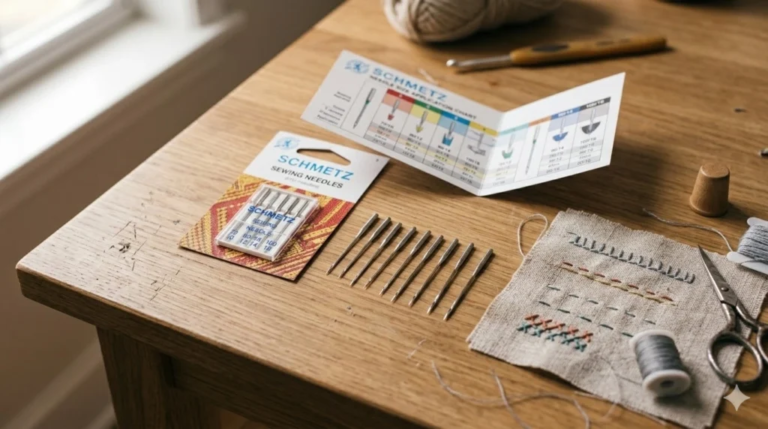
Joann used to carry Schmetz needles, known for reliable quality. Singer sewing machines and Brother sewing machines needles also perform well. For a full explanation of needle types, sizes, and fabric use, check complete sewing needles guide.
Cutting Mats and Rotary Cutters
Accurate fabric cutting matters just as much as accurate sewing. Joann used to offer self-healing cutting mats in different sizes, and similar options are still easy to find through online stores like Amazon.
A 24″ x 36″ cutting mat works well for most home sewing projects. The printed grid lines help you cut straight edges and measure seam allowances without needing a ruler every time.
It’s best to pair your mat with a 45mm rotary cutter and a good pair of fabric scissors. The rotary cutter makes it faster to cut through multiple fabric layers, while sharp scissors are useful for detailed trimming and cutting threads cleanly.
| Buying Strategy | What You Get | Total Cost | Savings |
|---|---|---|---|
| Separately | Walking foot ($20) + Presser feet set ($30) + 12 bobbins ($8) + Needle variety pack ($12) + Thread set ($15) | $85 | — |
| Bundle | Accessory kit with 8 presser feet, 10 bobbins, needles, seam ripper, hem gauge | $50-$60 | $25-$35 |
| Machine package deal | Machine + accessory kit + cutting mat + scissors | Varies, usually 15-20% off total | $40-$80 |
How to Thread Common Joann Machines
Threading can feel tricky at first, but it becomes easy with practice.
Singer Threading Guide
Singer sewing machines follow a fairly consistent threading pattern across most models:
Step-by-step Singer threading:
- Raise the needle to its highest position using the hand wheel
- Place the thread spool on the spool pin (horizontal or vertical depending on the model)
- Pull the thread through the first guide at the top of the machine
- Bring the thread down into the tension area (between the metal discs)
- Loop the thread up through the take-up lever (the moving metal part)
- Guide the thread back down through the remaining thread guides toward the needle
- Thread the needle from front to back (or use the automatic needle threader)
- Pull about 4–6 inches of thread through the needle and toward the back
The take-up lever (step 5) is where many threading mistakes happen. Make sure the thread properly catches in the hook at the top of its movement. If you skip this step, it can lead to thread bunching under the fabric.
Singer Heavy Duty 4423 specific tips:
- The automatic needle threader hook is delicate, so use gentle pressure
- Thread guides are numbered 1–5 on newer models to make setup easier
- Spool caps (small plastic discs) help keep the thread from slipping or tangling
Brother Threading Tips
Brother sewing machines computerized sewing machines often include printed threading diagrams on the machine body, making it easier to follow the correct path step by step. You can simply follow the numbered guide shown on the machine.
Brother CS6000i threading:
- Set the needle to its highest position
- Raise the presser foot (this releases thread tension)
- Place the thread spool on the pin and secure it with the spool cap
- Follow the printed threading path from the spool pin down toward the needle
- Use the automatic needle threader: pull the lever down, insert the thread, then raise the lever
- Bring the bobbin thread up before starting your first stitch
The automatic needle threader on Brother machines is generally more reliable than many others. The metal hook is designed to guide the thread through the needle eye smoothly, making the process more consistent and less frustrating.
Troubleshooting Thread Tension
Perfect thread tension creates stitches where the top thread and bobbin thread meet evenly in the middle of the fabric layers. When tension is not correct, you may see loose loops either on the top or bottom of the fabric.
Signs of tension problems:
- Loops on the underside of the fabric = top tension is too loose (lower the number)
- Loops on the top of the fabric = bobbin tension is too tight OR top tension is too tight (raise the number)
- Puckered fabric = both tensions are too tight
- Skipped stitches = the machine may not be threaded correctly through the take-up lever
Quick tension fixes:
- Rethread the entire machine (this solves most tension issues)
- Check that the bobbin is wound evenly (an uneven bobbin can cause problems)
- Make sure the presser foot was raised while threading (threading with it down locks the tension discs)
- Adjust the top tension dial slowly, one number at a time, and test after each change
- Clean lint from the bobbin area, as buildup can affect how the bobbin thread feeds
Most machines work well with the tension dial set around 4–5 for regular sewing. Only adjust when you notice a clear issue in your stitches.
Maintenance & Care for Your Joann Machine
Cleaning Schedule
After every project (or every 8–10 hours of sewing):
- Remove the needle plate and clean lint from the feed dogs
- Brush lint from the bobbin area using a small cleaning brush
- Wipe the exterior of the machine with a soft cloth
- Check for any thread tangles around the bobbin case area
Monthly maintenance:
- Remove the needle plate and bobbin case
- Use canned air to remove lint (keep the can about 6 inches away and avoid strong direct air)
- Clean any lint buildup from the thread tension discs
- Wipe the machine down with a slightly damp cloth
Every 6 months:
- Do a deeper clean of the bobbin area and remove all lint buildup
- Oil the machine if the manual recommends it (many modern machines do not require oiling)
- Check that all screws are tight, since vibration can loosen them over time
- Replace your cutting mat and rotary cutter blade if they become dull
Lint buildup is one of the main causes of sewing problems. It can block the feed dogs, affect thread tension, and make the machine run less smoothly. A small cleaning brush (usually included with the machine) can remove lint quickly and help keep your machine working properly.
Oil Requirements by Brand
Singer sewing machines: Older mechanical sewing machines usually need oiling every 8–10 hours of use. Apply 1–2 drops of proper sewing machine oil to the moving parts shown in your manual. Newer computerized models often have sealed parts that do not require oiling, so always check the manual first.
Brother sewing machines: Most Brother machines are designed with self-lubricating components and do not need regular oiling. If oiling is required, the manual will clearly mention it, so avoid adding oil unless instructed.
Janome sewing machines: Some higher-end Janome models, such as the HD3000, may benefit from occasional oiling. Always use only sewing machine oil. Do not use products like WD-40 or 3-in-1 oil, as they can damage plastic parts and internal components.
Never apply oil without guidance. Follow the oiling diagram in your machine’s manual exactly. Using too much oil can attract lint, create sticky buildup, and lead to thread bunching or other sewing issues.
When to Replace Needles
Dull or damaged needles can lead to skipped stitches, puckered fabric, and thread bunching. It’s important to replace your needle regularly to keep your sewing results clean and consistent.
Replace needles:
- After every 8–10 hours of sewing
- Right away after hitting a pin (you may hear a small “pop”)
- When you notice a bent tip or visible damage
- If stitches start looking uneven or the fabric begins to snag
Needles are inexpensive, usually costing around $5–$8 for a pack of 10. It’s not worth trying to extend the life of a worn needle, as it can damage your fabric and cause ongoing sewing issues.
A simple way to stay on track is to keep a needle log. Write the date on a small piece of tape and stick it to your machine when you insert a new needle. This helps you remember when it’s time for the next replacement.
Joann Sewing Classes: Learn Before You Buy
Joann used to offer in-store sewing classes that helped beginners and intermediate sewers learn how to use their machines with confidence. These sessions covered basics like threading, winding bobbins, selecting stitches, and simple troubleshooting, all taught by experienced instructors. You can still find similar learning options today through modern alternatives explained in our JOANN sewing classes guide.
Class benefits included:
- Hands-on practice without pressure to buy anything
- Guidance based on specific sewing projects
- Tips on machine care and fabric choices
- Classes ranging from beginner (“Sewing 101: Machine Basics”) to intermediate skills like zipper installation and garment making, usually priced around $20–$40
Today: Since Joann stores and in-person classes are no longer available, online learning has become the main option. Platforms like YouTube, Amazon tutorials, and various online sewing courses now provide step-by-step lessons. These resources cover machines from brands like Singer sewing machines, Brother sewing machines, and Janome sewing machines, and many are free or included with your purchase.
Frequently Asked Questions
Does Joann price match sewing machines?
Joann no longer operates physical stores. To find the best prices, compare options on Amazon and Walmart.
Can I return a sewing machine to Joann after using it?
Joann returns are no longer available. Instead, rely on retailer return policies and manufacturer warranties.
What warranty comes with Joann sewing machines?
Machines still include warranties from Singer, Brother, and Janome. Keep your receipt for claims.
Does Joann repair sewing machines?
Joann no longer offers repairs. Contact authorized service centers or local repair shops.
Are Joann sewing machines good for beginners?
Yes. Models like Singer Start 1304 and Brother XM2701 are great for beginners.
How often did Joann have sewing machine sales?
Joann used to run multiple sales yearly. Now, look for deals during events like Black Friday and seasonal online sales.